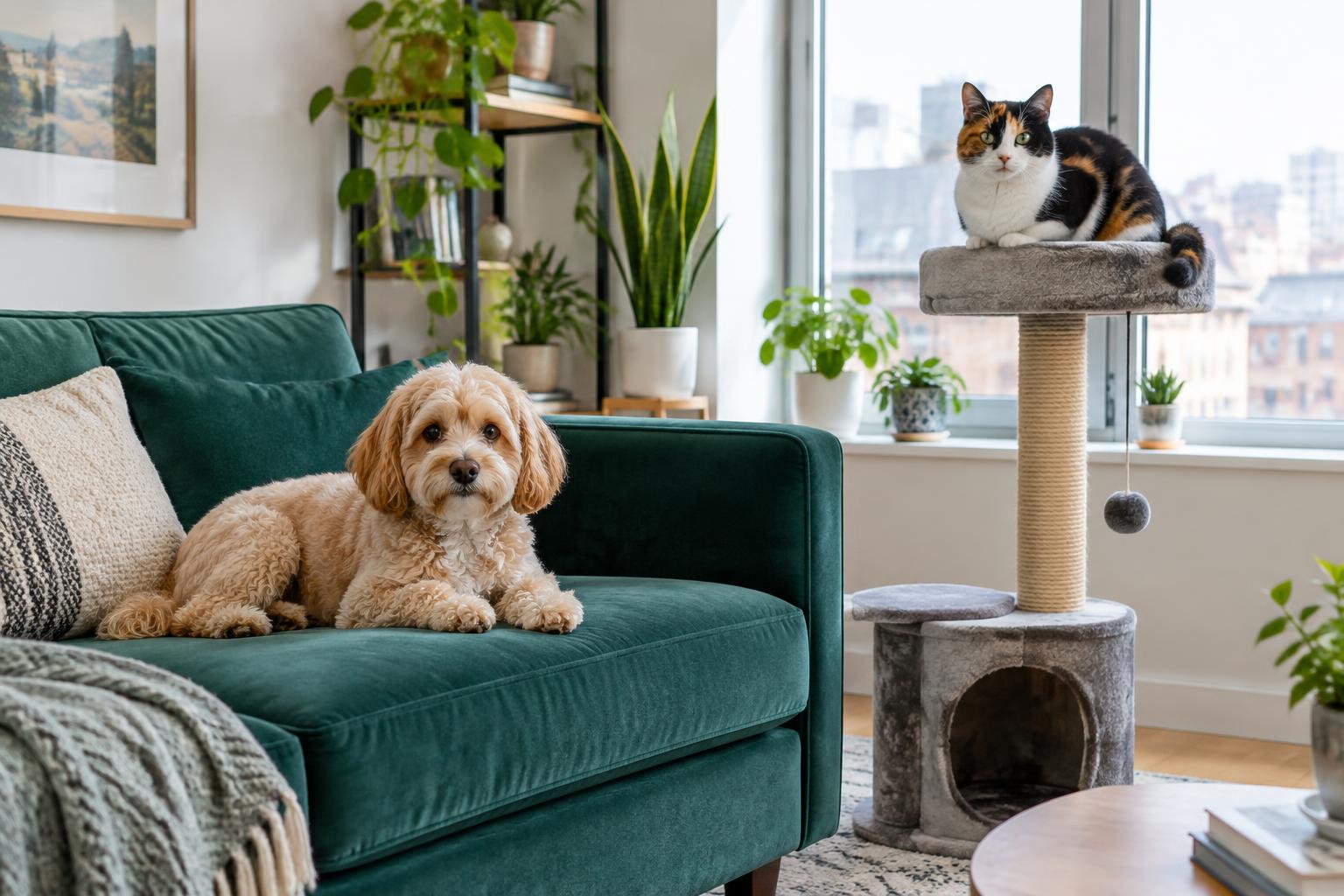
The best pet for an apartment is not simply the smallest one. Your routine, the individual animal’s temperament, your housing rules and the care you can arrange are more useful starting points than a breed ranking. A full-time job is another planning factor—not a reason to assume a particular breed will be comfortable alone all day.
Audit the home before choosing a breed
Check your lease or building rules, including pet restrictions. Think about stairs, lifts, nearby toilet areas, safe walking routes and how noise travels. A balcony is not a substitute for exercise and needs to be secured against falls or escapes.
For cats, usable space includes climbing areas, scratching surfaces, hiding spots and undisturbed places to rest. Put food, water and litter resources where they are accessible without competition. In a busy household, a quiet retreat can matter more than an extra room.
Plan a real workday
Write down when you leave, when you return and who can help in between. Include feeding, toilet opportunities, activity and companionship. A puppy, kitten, older animal or pet with a medical condition may need a very different schedule from a healthy adult.
Do not choose a dog because a list calls it “independent,” or assume a cat needs no company. No breed label guarantees comfort during a long absence. Depending on the individual, help might mean a trusted visitor, dog walker or another appropriate care arrangement. Include the cost and backup cover in your budget.
The AVMA’s discussion of back-to-work pet anxiety highlights why changes in time alone deserve attention. Introduce absences gradually. Persistent distress, destructive behavior or unexpected toileting warrants a discussion with your veterinarian; punishment does not address the underlying cause.
Meet the individual, not just the profile
An adult pet with a known history may give you more information about daily habits than a young animal whose temperament is still developing. Ask a shelter, foster carer or responsible breeder what they have actually observed.
- How does this pet behave around unfamiliar noises and people?
- What do they do when left alone, and how was that observed?
- What activity and care routine are they used to?
- Are there medical or behavioral needs that affect the match?
- Is support available if settling in proves difficult?
The AVMA’s guide to selecting a family pet is a useful starting point for this decision.
Use breed tendencies as questions, not promises
Our breed directory describes broad energy and home tendencies. A small, active dog can need substantial engagement; a larger animal can still need accessible housing and suitable exercise. “Apartment” never means “no walks,” and “house and garden” never means the garden provides all necessary stimulation.
For a calmer routine, explore adult animals whose observed behavior matches your household rather than searching for a guaranteed quiet breed. For an active routine, consider whether you can sustain it year-round, including during illness, holidays and busy work periods. Grooming, noise and medical needs can matter as much as energy.
Try the shortlist, then check the gaps
The breed-match tool can suggest starting points based on home and activity preferences. It does not assess separation tolerance, child safety, allergies or medical suitability. Review each suggestion with the people who know that animal.
| Part of your day | Care plan to make |
|---|---|
| Before work | Feeding, toilet needs, appropriate activity and a calm departure |
| While away | Individual care needs, any visits or breaks, and a safe environment |
| After work | Companionship, play, walks or other suitable activity |
| Unexpected delay | A trusted person who can step in |
| Weekends and holidays | A routine and care arrangement the pet can cope with |
Budget beyond the adoption day
Include food, coat care, preventive veterinary care, insurance or an emergency fund, and any help during the workday. Check whether your home remains suitable as the pet grows or ages. An appealing match should still be workable when the novelty wears off.
Breed tendencies are not guarantees. Choose an individual whose needs you can meet consistently, and seek professional help if settling in raises health or behavioral concerns.