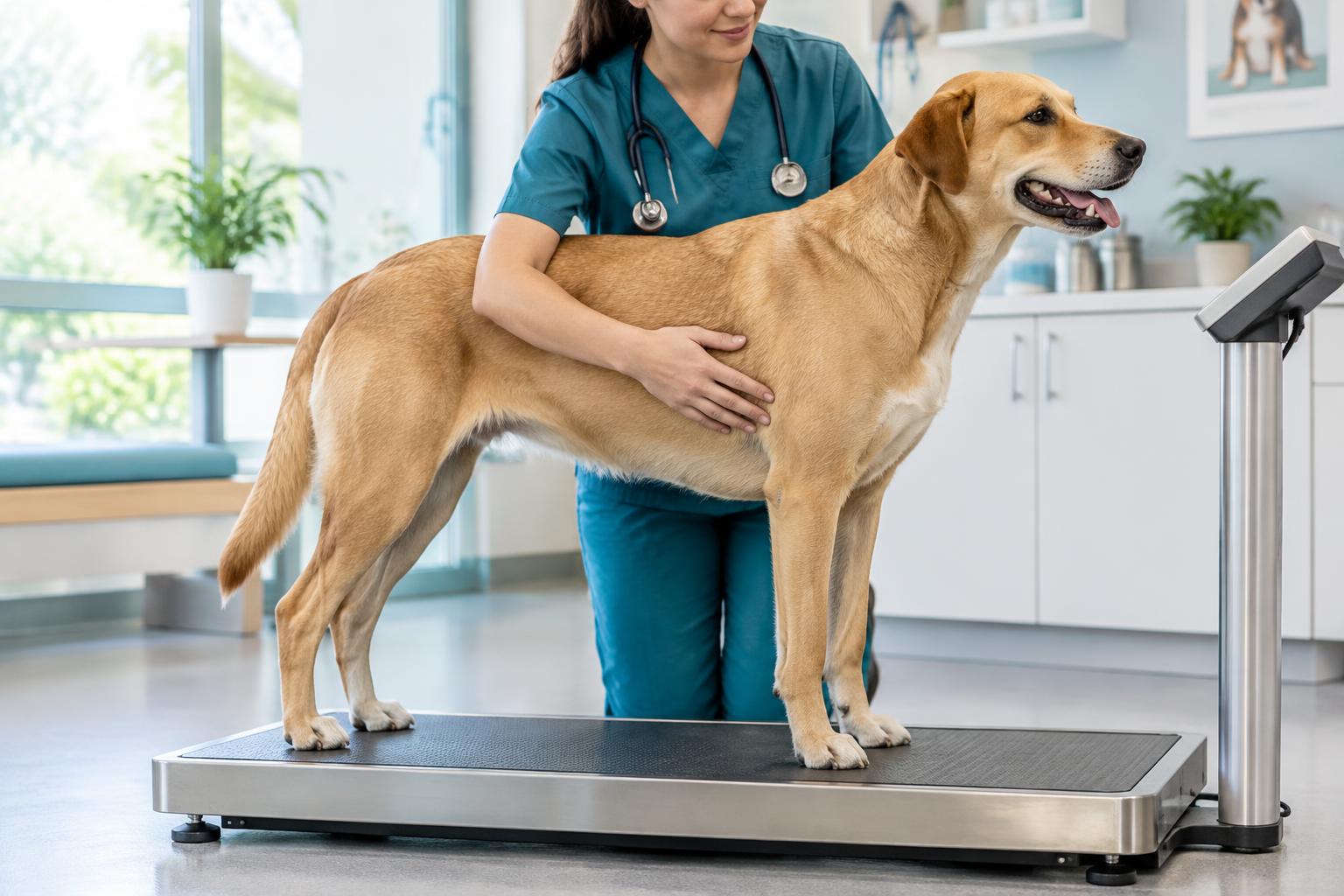
A scale tells you how heavy your pet is. It does not, by itself, tell you whether they carry an appropriate amount of body fat. Adult frame, sex and muscle can all affect the number. That is why a veterinary weight check also involves looking at and gently feeling the animal.
Start with body condition
The World Small Animal Veterinary Association provides separate nine-point body condition charts for dogs and cats. These describe features such as rib coverage and waist shape. The dog chart describes scores 4–5 as ideal, and the cat chart describes 5 as ideal.
A home observation is not the same as a clinical assessment. Your veterinary team can distinguish body fat from muscle, interpret changes and advise on an individual goal. A thick coat can make a visual judgment particularly unreliable.
Three observations to discuss with your vet
Ribs: With gentle pressure, feel along the ribcage. On the ideal part of the WSAVA charts, ribs are palpable without excessive fat covering. Do not press hard or continue if handling causes distress or pain.
Waist from above: Look for the shape behind the ribs. The charts describe a waist, but its appearance depends on anatomy and coat. Take a calm look while the animal stands naturally rather than trying to position them forcefully.
Side view: The dog chart also considers abdominal tuck. Cats have a different outline and may have a visible abdominal fat pad. Use the species-specific chart instead of expecting a cat to look like a dog.
What a breed range can—and cannot—tell you
Our weight reference tool and breed guides give broad adult estimates in both kilograms and pounds. They are preliminary editorial reference ranges, not verified standards, prescriptions or proof of health. Crossbreeds such as Maltipoos can vary with parental size; the breed name alone cannot supply an individual target.
A pet can fall within a broad range and still have an unsuitable body condition. Another may sit outside it because of their frame. Puppies, kittens, pregnancy and health conditions need separate guidance. Do not use an adult range to restrict a growing animal’s food.
Track change rather than one isolated number
If weighing at home is safe and comfortable, use a consistent method and keep a dated record. Note changes in appetite, activity, food portions and treats as well. A trend gives your veterinary team more useful information than an unexplained number.
Unexpected weight loss or gain deserves veterinary advice, particularly alongside changes in drinking, eating, toileting or behavior. Do not assume every change is simply a feeding issue. If a pet is unwell, seek care rather than waiting for the next weigh-in.
Prepare for a useful appointment
- Bring previous weights if you have them.
- Record the food name, portions, treats and supplements.
- Describe daily activity and any recent changes.
- Ask for both a body condition and a muscle assessment.
- Agree on an individual plan and when to review progress.
Body condition scoring focuses on body fat; it does not replace evaluating muscle or investigating illness. Two animals of the same weight may need very different care.
Avoid a do-it-yourself crash diet
Do not drastically cut portions or substitute a diet solely because a calculator flags a number. Your pet still needs adequate nutrients, and cats in particular should not be left without food as a weight-loss strategy. Speak to your veterinarian before starting a weight-management plan, especially if appetite is reduced or a medical condition is present.
Read our food-label guide to separate nutritional adequacy from marketing claims. The right question is not “What does this breed usually weigh?” but “What body condition and nutrition plan are right for this individual?”
Educational guidance only. Not a diagnosis, an individualized calorie target or a veterinary-reviewed treatment plan.