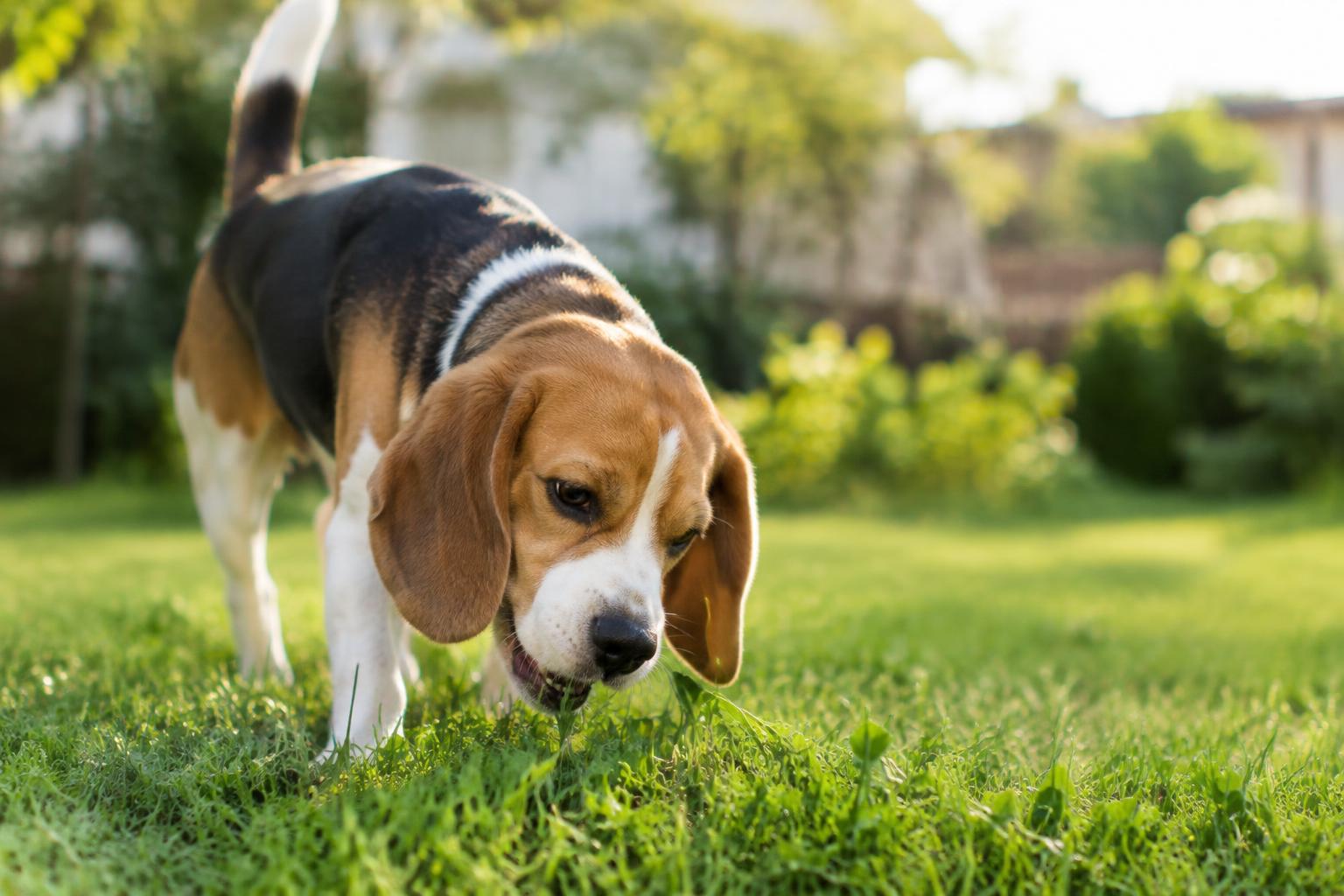
It is one of the most common questions dog owners ask: your dog trots into the garden and starts chewing grass like a tiny lawnmower. The good news is that, for most dogs, grass eating is a normal behaviour rather than a sign of illness.
Why do dogs eat grass?
Researchers and veterinarians have not landed on a single answer, but several explanations are widely discussed:
- It's normal scavenging behaviour. Dogs' ancestors ate a varied diet, and nibbling plants seems to be part of ordinary canine behaviour.
- They like the taste or texture. Fresh spring grass is often more popular than dry, tough blades.
- Boredom. Dogs that do not get enough exercise or mental stimulation may graze simply to have something to do.
- An upset stomach — sometimes. A small number of dogs vomit after eating grass, but most dogs that graze show no sign of feeling unwell beforehand.
Is eating grass bad for my dog?
Grass itself is generally not dangerous in small amounts. The bigger risks come from what is on or around it:
- Pesticides, herbicides and fertilisers used on lawns and parks.
- Toxic plants growing among the grass. The ASPCA keeps a searchable list of plants that are toxic to dogs.
- Parasites picked up from areas soiled by other animals.
- Grass awns and seeds that can lodge in the mouth, nose, ears or paws.
| Usually fine | Worth checking with a vet |
|---|---|
| Occasional grazing, then normal play | Eating grass frantically or constantly |
| No vomiting or rare, single episode | Repeated vomiting, diarrhoea or blood |
| Normal appetite and energy | Lethargy, weight loss or reduced appetite |
When should I call the vet?
Contact your vet if grass eating is new and intense, or if it comes with vomiting more than once, diarrhoea, a swollen belly, drooling, lethargy or a change in appetite. The Merck Veterinary Manual notes that persistent or repeated vomiting needs veterinary attention.
How to reduce grass eating
- Add exercise and enrichment. Longer sniff walks, puzzle feeders and short training sessions often reduce boredom grazing.
- Teach a "leave it". Reward your dog for turning away from the grass.
- Avoid treated areas. Keep your dog off lawns that may have been sprayed.
- Review the diet with your vet. Don't change foods or add fibre supplements without professional advice.
The takeaway
An occasional grass snack is usually nothing to worry about. Focus on safe environments and plenty of enrichment, and let your vet know if grazing comes with any signs of illness.
References and further reading
- American Kennel Club — Why does my dog eat grass?
- PetMD — Why do dogs eat grass?
- ASPCA — Toxic and non-toxic plants
- Merck Veterinary Manual — Vomiting in dogs
- RSPCA — Dog health
Sources consulted October 20, 2026. This article is general information, not a veterinary diagnosis. Cover image generated with AI for illustration.