How to Stop Your Dog From Pulling on the Leash: 9 Training Tips That Actually Help
Does walking your dog sometimes feel more like waterskiing than a relaxing stroll?
One moment, you're enjoying the fresh air. The next, your dog spots a squirrel, catches an interesting scent, or notices another dog across the street — and suddenly, you're being pulled down the sidewalk.
If this sounds familiar, you're certainly not alone.
Leash pulling is a common challenge for dog owners. But here's something important to understand: your dog isn't necessarily trying to be stubborn, disobedient, or dominant.
In many cases, pulling is simply a behavior that has worked before.
The good news? With patience, consistency, and reward-based training, many dogs can learn to walk more comfortably on a loose leash.
In this guide, we'll explore why dogs pull, what their behavior may reveal about their emotions, and nine practical training techniques you can start using today.
Why Does My Dog Pull on the Leash?
Before trying to change your dog's behavior, it helps to understand why the behavior happens.
Dogs experience the world differently from humans. Their sense of smell plays an enormous role in how they explore their surroundings, and a simple neighborhood walk can provide a constantly changing collection of scents, sounds, movements, and social information.
Your dog may be pulling because something ahead seems exciting, interesting, or even frightening.
1. Dogs Naturally Walk at Different Speeds
Many dogs move faster than their owners, especially when exploring a new environment.
A dog doesn't automatically understand that walking beside a human requires adjusting its pace.
Loose-leash walking is a learned skill, not an instinctive rule.
2. Pulling May Have Been Rewarded
Imagine your dog sees an interesting tree and pulls toward it.
You follow, and your dog gets to investigate the tree.
From your dog's perspective, pulling worked.
If this happens repeatedly, the dog may learn that tension on the leash is an effective way to reach something desirable.
3. Excitement Can Make Self-Control Difficult
Some dogs become highly excited before a walk even begins.
The sound of a leash being picked up, the opening of a door, or the sight of another dog can increase their arousal.
When excitement is high, responding to familiar cues may become more difficult.
4. Fear or Frustration May Be Involved
Not all pulling comes from enthusiasm.
A dog may pull away from a frightening situation, rush toward another dog out of frustration, or struggle to cope with a busy environment.
This distinction matters because the best training approach depends on what is driving the behavior.
A dog that is frightened needs help feeling safe, not simply more obedience practice.
What Your Dog May Be Thinking During a Walk
We cannot know a dog's exact thoughts from leash behavior alone. However, learning theory and canine body language help us understand possible motivations.
When your dog suddenly pulls toward a patch of grass, the motivation may be exploration.
When your dog pulls toward another dog while barking and lunging, excitement, frustration, fear, or a combination of emotions may be involved.
When your dog pulls away from traffic, loud noises, or unfamiliar people, it may be trying to create distance from something uncomfortable.
The key is to observe the whole dog.
Look at posture, movement, facial tension, tail position, and the surrounding environment rather than interpreting pulling as a single emotion.
Understanding your dog's behavior is the first step toward changing it.
9 Training Tips to Stop Your Dog From Pulling on the Leash
These techniques focus on positive reinforcement and practical management. They are designed for ordinary leash-pulling problems, not as a substitute for professional help with severe fear, aggression, or reactivity.
1. Start Training Indoors
One of the biggest mistakes owners make is beginning leash training in an environment filled with distractions.
Your living room or a quiet hallway can be a much better starting point.
Attach your dog's leash and begin walking slowly.
Whenever your dog stays close while the leash remains loose, mark the behavior with a cheerful “Yes!” and offer a small treat.
Practice changing direction, stopping, and starting again.
Keep sessions short and enjoyable.
Training goal: Teach your dog that walking near you leads to rewards before adding outdoor distractions.
2. Reward a Loose Leash Before Your Dog Pulls
Many owners only react after their dog begins pulling.
Instead, pay attention to the moments when your dog is already doing what you want.
If your dog walks beside you with a loose leash, reward that behavior.
At first, you may need to reward frequently.
As your dog improves, you can gradually increase the number of steps between rewards.
The goal isn't to keep your dog glued to your leg. It's to help your dog understand that moving forward with a relaxed leash is worthwhile.
3. Stop Moving When the Leash Becomes Tight
This technique teaches a simple relationship:
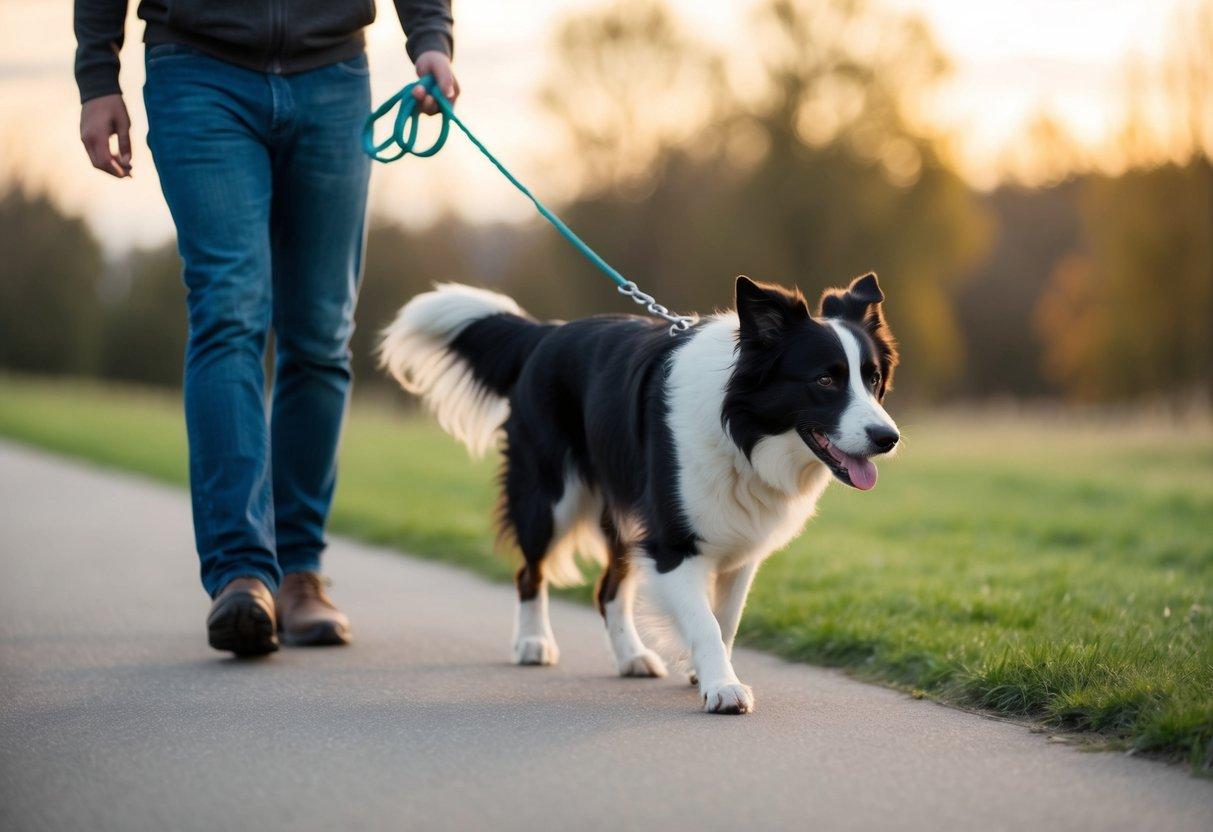
A loose leash allows progress. A tight leash does not.
When your dog pulls, stop walking without jerking the leash.
Wait for your dog to reduce the tension, turn toward you, or take a step back.
Mark and reward the loose leash, then continue.
Some dogs may become frustrated when you stop, so practice in an easy environment and reward generously.
If your dog becomes increasingly distressed or agitated, simplify the exercise rather than repeatedly creating frustration.
Consistency matters more than force.
4. Practice Changing Directions
Dogs sometimes become focused on moving straight toward an interesting destination.
Changing direction can help teach them to pay attention to your movements.
Begin in a quiet area.
Walk a few steps, say a cheerful cue such as “This way!”, and turn in another direction.
Reward your dog for following.
Over time, your dog can learn that checking in with you is part of the walking routine.
Avoid abrupt leash corrections. The goal is to invite your dog to follow, not to physically pull the dog around.
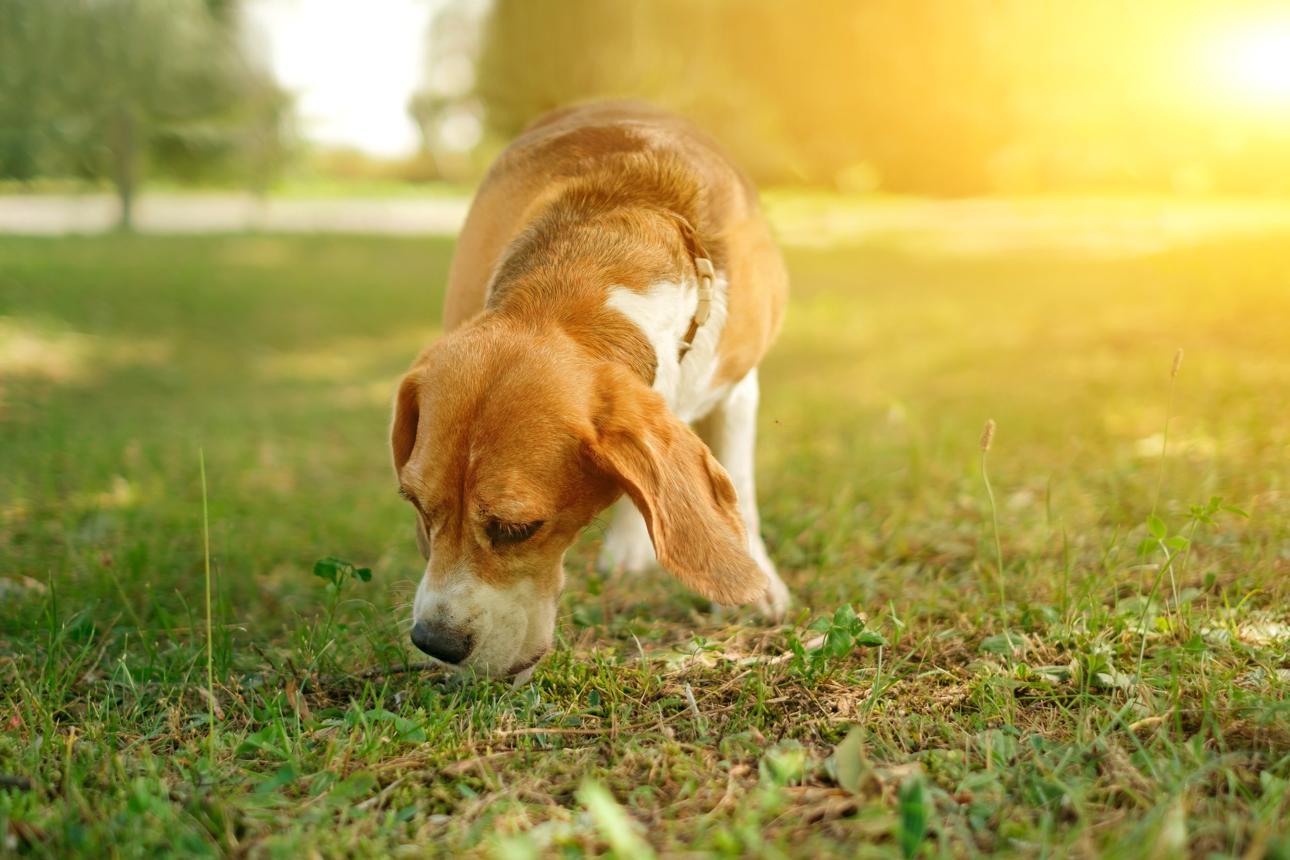
5. Use Sniffing as a Reward
Here's a training idea that many owners overlook:
Your dog may value the opportunity to sniff just as much as a treat.
Instead of treating sniffing as an unwanted distraction, use it strategically.
Ask your dog to walk a few steps with a loose leash.
Then say “Go sniff!” and allow your dog to investigate a safe patch of grass.
This teaches your dog that cooperating with you can lead to something naturally rewarding.
It also makes walks more interesting for the dog.
6. Choose the Right Walking Equipment
Comfortable equipment can make training easier and safer.
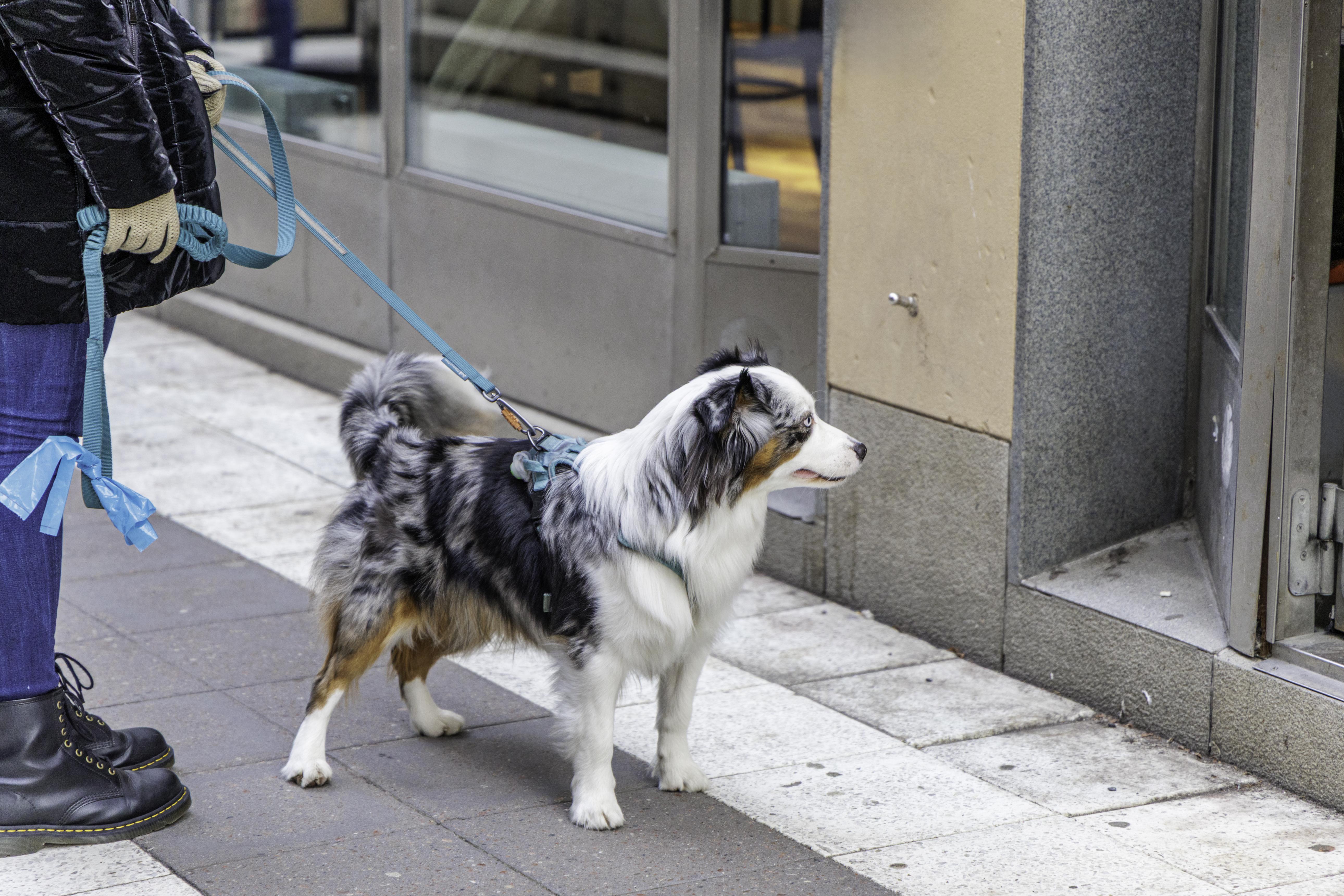
A properly fitted body harness may be useful, especially for dogs that pull strongly or are vulnerable to neck strain.
A front-attachment harness can help some owners manage pulling while they teach loose-leash walking, although the fit and design matter.
Equipment alone does not teach the behavior.
Avoid relying on devices that cause pain, fear, or discomfort to suppress pulling.
The American Veterinary Society of Animal Behavior recommends reward-based training and advises against aversive training methods.
For dogs with physical limitations or existing injuries, consult a veterinarian about appropriate equipment.
7. Reduce Distractions While Your Dog Learns
Imagine trying to learn a difficult skill in a noisy room while several people are talking to you.
Dogs can face a similar challenge when training in busy environments.
Begin with quieter streets, familiar routes, or less crowded times of day.
Once your dog can walk comfortably there, gradually introduce more challenging situations.
You might progress from a quiet driveway to a residential sidewalk, then to a park with distant activity.
If your dog stops responding to rewards or becomes overwhelmed, increase the distance from the distraction.
Training should become harder gradually, not all at once.
8. Teach Your Dog to Check In With You
A dog that occasionally looks toward its owner during a walk is easier to guide than a dog that remains completely focused on everything else.
You can encourage this behavior without constantly calling your dog's name.
During a quiet walk, wait for your dog to glance toward you naturally.
Say “Yes!” and reward.
Repeat throughout the walk.
Over time, checking in can become a useful habit.
This is particularly helpful before crossing streets, changing direction, or approaching potentially distracting environments.
9. Keep Training Sessions Short and Consistent
A long, frustrating training session is rarely better than several successful short ones.
Start with a few minutes of focused practice.
If your dog is doing well, end the session on a positive note.
You can then allow a more relaxed walk in a suitable area, using management strategies to avoid rehearsing strong pulling.
Remember that progress is rarely perfectly linear.
Your dog may walk beautifully in the backyard and struggle on a busy sidewalk.
That doesn't necessarily mean the training has failed. It means the environment has changed.
A Simple 7-Day Loose-Leash Training Plan
Use this schedule as a flexible introduction, not as a promise that every dog will stop pulling in seven days.
Some dogs need considerably more time, especially if they have practiced pulling for years or become overwhelmed outdoors.
| Day | Training Focus | Suggested Practice |
|---|---|---|
| Day 1 | Indoor loose-leash walking | Reward 3–5 calm steps |
| Day 2 | Following direction changes | Practice cheerful turns |
| Day 3 | Walking in a quiet outdoor area | Reward frequent check-ins |
| Day 4 | Stop-and-go practice | Resume when the leash relaxes |
| Day 5 | Sniffing as a reward | Alternate loose-leash steps with sniff breaks |
| Day 6 | Mild distractions | Practice at a comfortable distance |
| Day 7 | Review and reinforce | Repeat the easiest successful exercises |
If your dog struggles with a step, return to an easier version.
The objective is to build a reliable skill through repeated successful experiences.
What If My Dog Pulls and Barks at Other Dogs?
Pulling combined with barking, lunging, growling, or intense fixation may indicate leash reactivity.
Reactive behavior can have different causes, including fear, frustration, and heightened arousal.
It should not automatically be labeled aggression.
For example, some dogs desperately want to greet other dogs but become frustrated because the leash prevents them from approaching.
Others are uncomfortable around unfamiliar dogs and react because they want more space.
The appropriate response depends on the individual dog.
What You Can Do
First, create enough distance for your dog to remain relatively calm.
Avoid forcing close greetings.
Reward your dog for noticing another dog at a manageable distance and then being able to disengage or respond to you.
If the dog becomes highly distressed, lunges repeatedly, or presents a safety risk, seek help from a qualified reward-based trainer or veterinary behavior professional.
Severe reactivity often requires a structured behavior modification plan.
Five Common Leash-Training Mistakes
Even well-intentioned owners can accidentally make leash pulling harder to resolve.
Mistake 1: Letting the dog pull sometimes but not others.
If pulling occasionally gets your dog to an exciting destination, the behavior may continue.
Mistake 2: Expecting perfect behavior too quickly.
A dog learning to walk calmly in a quiet backyard may not be ready for a crowded city sidewalk.
Mistake 3: Using harsh corrections.
Painful or frightening corrections may suppress behavior without addressing its cause and can create welfare risks.
Mistake 4: Eliminating every opportunity to sniff.
Dogs benefit from exploring their environment. Structured sniff breaks can make walks more satisfying.
Mistake 5: Ignoring possible medical or emotional causes.
Sudden changes in walking behavior can sometimes reflect pain, fear, or other health problems.
If pulling or unusual behavior appears suddenly, especially alongside limping, discomfort, or marked behavioral changes, consult your veterinarian.
Why Sniffing Matters More Than You Might Think
A walk is not simply exercise for a dog.
It is also an opportunity to gather information about the environment.
Dogs use scent to investigate places, objects, and traces left by other animals.
Allowing appropriate sniffing opportunities can support exploration and mental enrichment.
This doesn't mean your dog should be allowed to pull you toward every interesting smell.
Instead, you can combine loose-leash walking with planned sniff breaks.
A walk that includes both movement and exploration may be more enjoyable for your dog than one focused exclusively on covering distance.
How Long Does It Take to Stop a Dog From Pulling?
There is no universal timeline.
Some dogs improve noticeably after several consistent training sessions.
Others need weeks or months of practice.
Progress depends on factors such as age, training history, motivation, environment, physical comfort, and emotional state.
A puppy learning leash skills for the first time may face different challenges from an adult dog that has spent years pulling toward exciting destinations.
Instead of measuring success only by how quickly your dog stops pulling, look for smaller improvements.
Is your dog checking in more often?
Can you walk several additional steps with a loose leash?
Does your dog recover from distractions more easily?
These are meaningful signs of learning.
Frequently Asked Questions
Why does my dog pull on the leash even after training?
Your dog may still find pulling rewarding, especially in distracting environments. The behavior may also be more difficult in unfamiliar places. Practice in easier settings and gradually increase distractions.
Should I stop walking every time my dog pulls?
Stopping can be useful for teaching that leash tension does not lead to forward movement. However, it should be part of a broader reward-based training plan, and the exercise should be adjusted if your dog becomes frustrated or distressed.
Is a harness better than a collar for dogs that pull?
A properly fitted harness can help manage pulling and may reduce pressure on the neck. The best option depends on your dog's size, health, body shape, and behavior. A harness is a management tool, not a substitute for training.
Can older dogs learn to stop pulling?
Yes. Adult and senior dogs can learn new behaviors. Dogs with a long history of pulling may require additional practice, patience, and consistency.
Why does my dog walk well at home but pull outside?
Outdoor environments contain many distractions, including smells, sounds, people, and other animals. Your dog may need gradual training to apply familiar skills in more challenging situations.
Should I let my dog sniff during walks?
Yes, when it is safe and appropriate. Sniffing is a natural form of exploration. You can teach your dog to walk on a loose leash while also allowing designated sniff breaks.
What if my dog suddenly starts pulling or acting strangely?
A sudden change may have a medical, emotional, or environmental cause. If the behavior is unusual, persistent, or accompanied by signs of pain or distress, consult your veterinarian.
Final Thoughts: Better Walks Begin With Understanding
A dog that pulls on the leash isn't necessarily trying to challenge your authority.
Often, the dog is simply responding to an exciting world without having learned how to navigate it calmly beside a human.
The most useful approach combines clear communication, appropriate rewards, comfortable equipment, gradual practice, and attention to your dog's emotional needs.
Instead of treating every walk as a battle for control, think of it as an opportunity to teach your dog a new skill.
With patience and consistency, many dogs can learn that a loose leash leads to good things — including treats, exploration, and enjoyable adventures together.
And when both ends of the leash feel more relaxed, everyday walks can become one of the best parts of sharing life with your dog.
Sources and Further Reading
-
American Veterinary Society of Animal Behavior — Humane Dog Training Position Statement: https://avsab.org/resources/position-statements/
-
ASPCA — Position Statement on Training Aids and Methods: https://www.aspca.org/about-us/aspca-policy-and-position-statements/position-statement-training-aids-and-methods
-
Dogs Trust — National Dog Survey 2024, Changing Canine Behaviour: https://www.dogstrust.org.uk/downloads/Dogs_Trust_NDS_Report_2024__.pdf
-
American Veterinary Society of Animal Behavior — What Are Reward-Based Training Methods for Dogs and Cats?: https://avsab.org/what-are-reward-based-training-methods-for-dogs-and-cats/