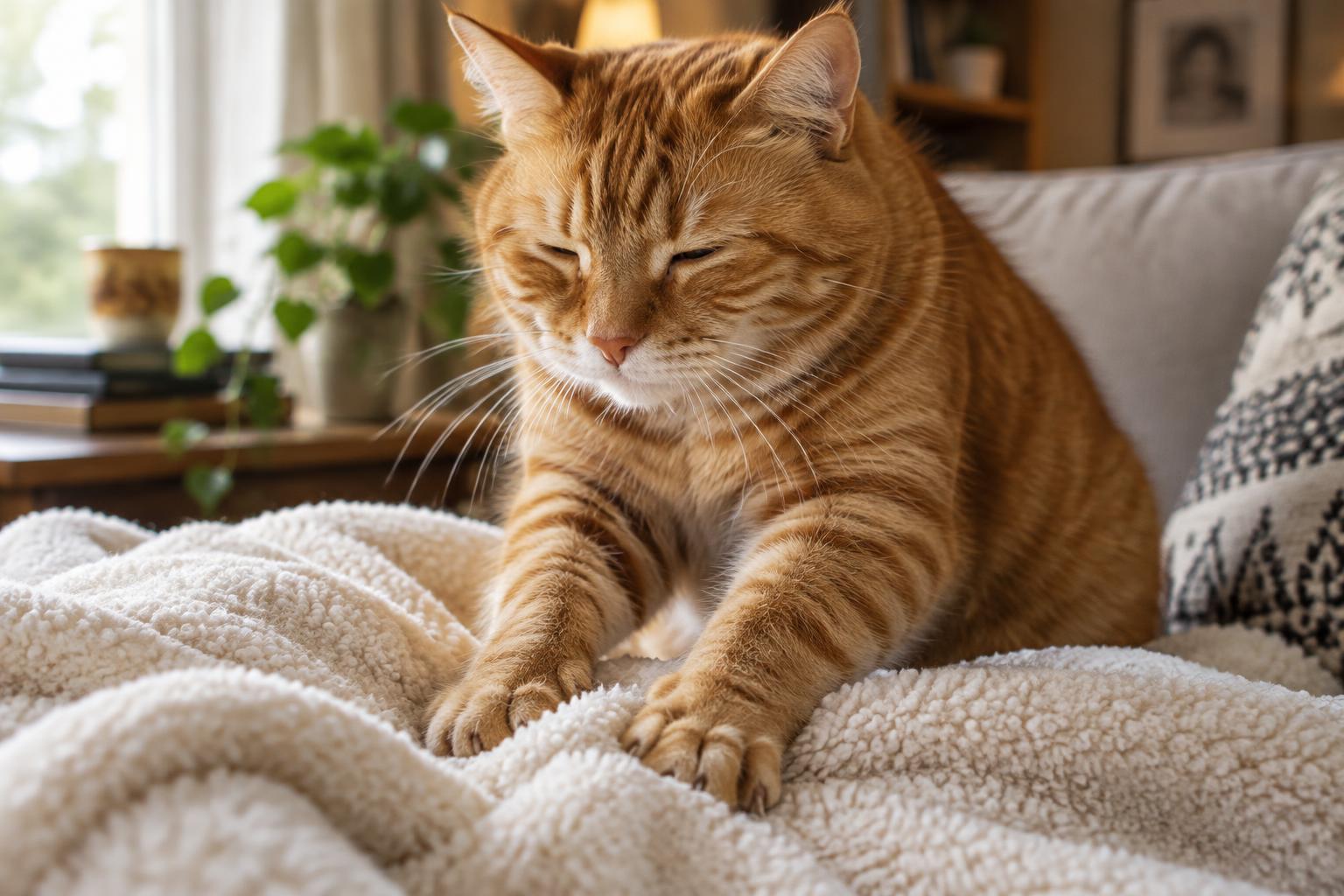
If you share your home with a cat, you have probably felt it: those rhythmic front-paw pushes on your lap, a blanket, or your stomach at 5 a.m. Cat people call it “making biscuits”, and it is one of the most googled cat behaviors in the world — tens of thousands of people search “why do cats knead” every month.
So what is actually going on?
It starts before your cat can see
Kneading begins in the first days of life. Kittens press their paws against their mother’s belly while nursing, a motion that helps stimulate milk flow. The behavior is paired with warmth, food, and safety — which is why so many adult cats purr, drool, or half-close their eyes while they do it. According to PetMD, this early association with comfort is the most widely accepted explanation for why the behavior persists into adulthood.
The leading theories
No single study has settled the question, but veterinarians and behaviorists point to a few overlapping explanations:
- Comfort and contentment. Kneading is a self-soothing behavior carried over from kittenhood. A cat kneading on you is usually a cat that feels safe.
- Scent marking. Cats have scent glands in their paw pads. Kneading deposits their scent on soft surfaces — including you — as a quiet way of claiming a familiar spot.
- Nesting instinct. Wild ancestors of domestic cats reportedly patted down grass or leaves to make a soft resting place. Your blanket may be getting the same treatment.
- Stretching. The motion also works the muscles and tendons of the paws and forelegs, a bit like a morning stretch.
The Blue Cross and Purina both note that kneading is normal, healthy behavior — and often a compliment to the person or blanket chosen.
Why the claws?
Kneading often comes with extended claws, which is the part owners enjoy less. This is not aggression — it is simply how the motion works. If it hurts:
- Keep your cat’s nails trimmed.
- Place a thick blanket between the cat and your lap.
- Never punish kneading; redirect gently onto a soft surface instead.
When to pay closer attention
Kneading itself is harmless. But behavior changes around it can matter: a cat that suddenly stops kneading and seems withdrawn, or one that kneads frantically while showing other signs of stress, may be telling you something. As always, persistent changes in behavior deserve a conversation with your veterinarian.
The short answer
Your cat kneads because it learned, days after being born, that this motion means warmth, food, and safety. When your cat “makes biscuits” on your lap, it is treating you like family — claws and all.
This article is educational and based on the sources linked above. It is not a substitute for individual veterinary advice.