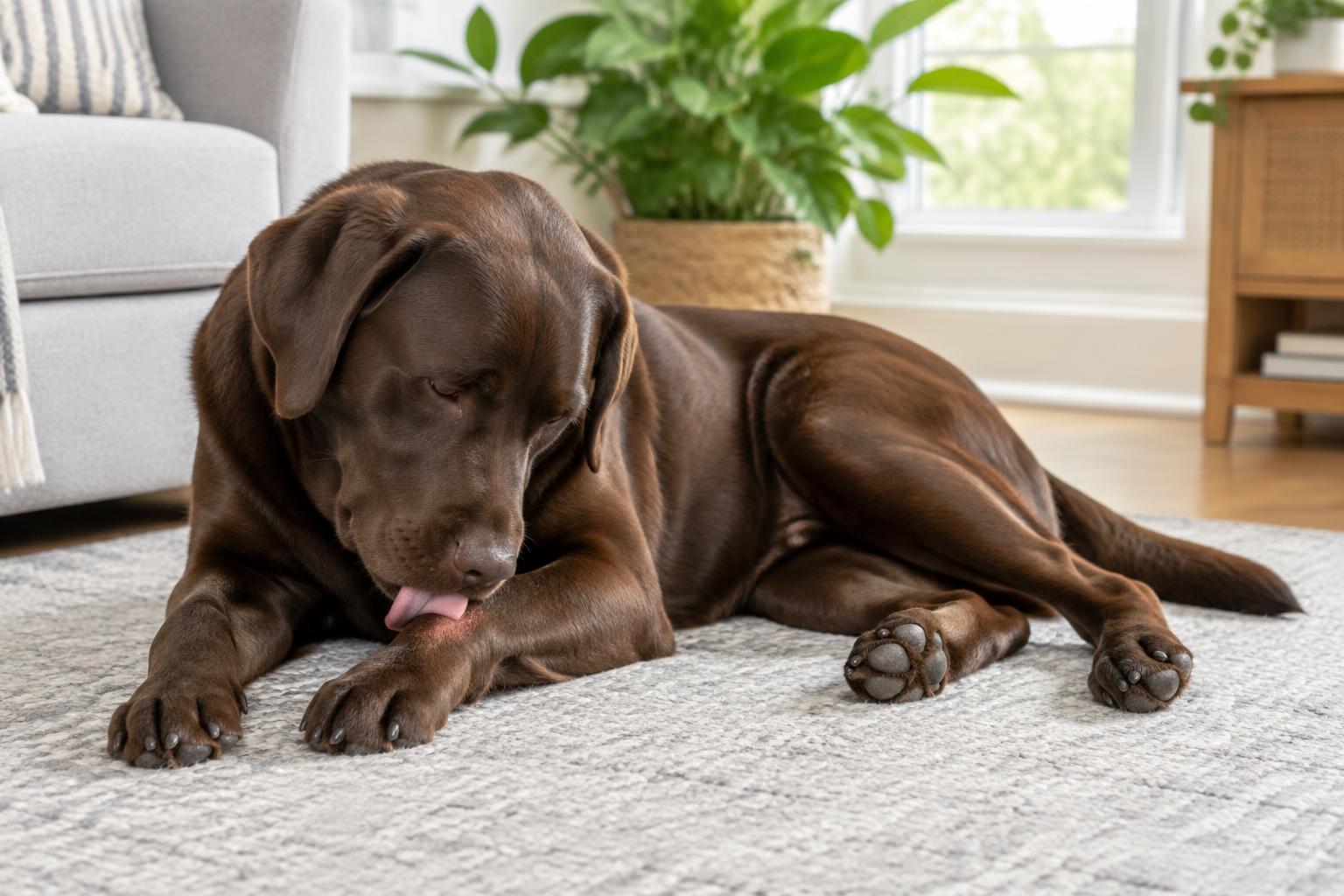
Your dog settles down, bends toward a front foot and starts licking. A quick clean after a walk can be ordinary grooming. Repeated licking that interrupts rest, damages the skin or comes with limping is a different story.
The short answer: dogs may lick their paws to groom themselves, but persistent licking can be linked to an injury, irritation, allergies, parasites, infection or pain. Boredom and anxiety are also possible, but medical causes should not be dismissed. Licking alone cannot tell you which explanation fits your dog.
This guide helps you notice patterns and prepare for a veterinary conversation—not diagnose an allergy or choose a treatment at home.
Is paw licking normal?
The American Kennel Club's paw-licking guide explains that occasional licking is part of normal self-grooming. The useful distinction is a change from your dog's usual behavior, not an arbitrary number of licks.
Look for repetition, difficulty settling and visible changes. A dog who keeps returning to the same foot, wakes to chew at it or leaves the skin sore needs attention. Do not wait for an obvious wound before asking for advice about persistent licking.
Why does my dog keep licking his paws?
1. Something is irritating or hurting one paw
A sudden focus on one foot may follow a cut, damaged nail, sting, burn or something caught between the toes. Outdoor irritants such as road salt can also bother paws. PetMD's overview describes injuries and pain among the possible causes.
If your dog allows gentle handling, look at the pads, nails and spaces between the toes. Stop if they pull away, growl or seem painful. Do not dig out an embedded object, force an examination or assume a normal-looking paw rules out pain.
2. Itchy skin or allergies
Environmental, food-related and contact allergies can contribute to itchy skin. Parasites can cause itch too. More than one paw may be affected, but the number of paws is a clue—not an allergy test.
The Merck Veterinary Manual's allergy guidance explains why veterinary assessment matters. Do not diagnose a food allergy from paw licking or repeatedly change foods without a plan. Our dog-food label guide explains why marketing claims cannot establish a diet's suitability.
3. Inflammation or infection
Redness, swelling, sores, odor or discharge deserve veterinary attention. Licking can further irritate damaged skin, sustaining a cycle of discomfort and licking.
You may encounter the word pododermatitis. VCA explains that it means inflammation of the paws; it is not one single disease. Different underlying causes can need different investigations and treatments. A smell alone does not prove a yeast infection.
4. Boredom, stress or a repetitive habit
Behavioral factors can play a role, but “just boredom” is not a safe first conclusion—especially when licking is new, persistent or damaging the skin.
Once health concerns have been addressed, discuss your dog's routine with your vet or an appropriately qualified behavior professional. Comfortable rest, sniffing opportunities and suitable activities may support wellbeing. Our enrichment guide offers gentle ideas, not a treatment for painful or itchy paws. Never punish a dog for licking.
One paw or several: what should I notice?
| Pattern you notice | Useful next step |
|---|---|
| Brief grooming, then normal rest and movement | Observe for changes; check paws gently after walks |
| Sudden repeated attention to one foot | Look for a local injury or irritant if handling is comfortable; contact your vet if it persists or hurts |
| Several paws repeatedly licked or chewed | Record the pattern and ask your vet about possible skin, itch or other causes |
| Redness, swelling, odor, sores or limping | Arrange veterinary advice promptly |
| Significant bleeding, a serious pad injury or inability to bear weight | Seek urgent veterinary care |
These observations do not diagnose the cause. Allergies, infection and injury can overlap, and a problem may be present even without obvious skin changes.
What can I safely do at home?
- Inspect gently, without forcing it. Look at all paws, not only the one being licked. Note damaged nails, skin changes or visible debris.
- Remove ordinary outdoor irritants. After a walk, gently rinse dirty paws with plain water and dry them, including between the toes. This is not treatment for an infection or a significant wound.
- Keep a short record. Note when licking began, which paws are involved, recent walks or exposures and changes in movement. A photo or short video can help explain the pattern to your clinic.
- Prevent further damage with veterinary guidance. If licking is making a wound worse, ask your vet about a properly fitted protective collar. Do not improvise a tight bandage or leave a damp sock on the paw.
- Arrange care if it continues. Gentle distraction is not a cure for pain or itch, and repeated licking deserves an explanation.
Skip these home remedies
Do not apply tea tree oil, alcohol, hydrogen peroxide or a guessed skin treatment. VCA's wound-care guidance warns that unsuitable products can harm healing. Ask your vet before using creams, shampoos or other products on irritated or broken skin.
Do not give human painkillers or other medicines without veterinary direction. Avoid treating a presumed allergy or infection from a social-media recipe: similar-looking signs can have very different causes.
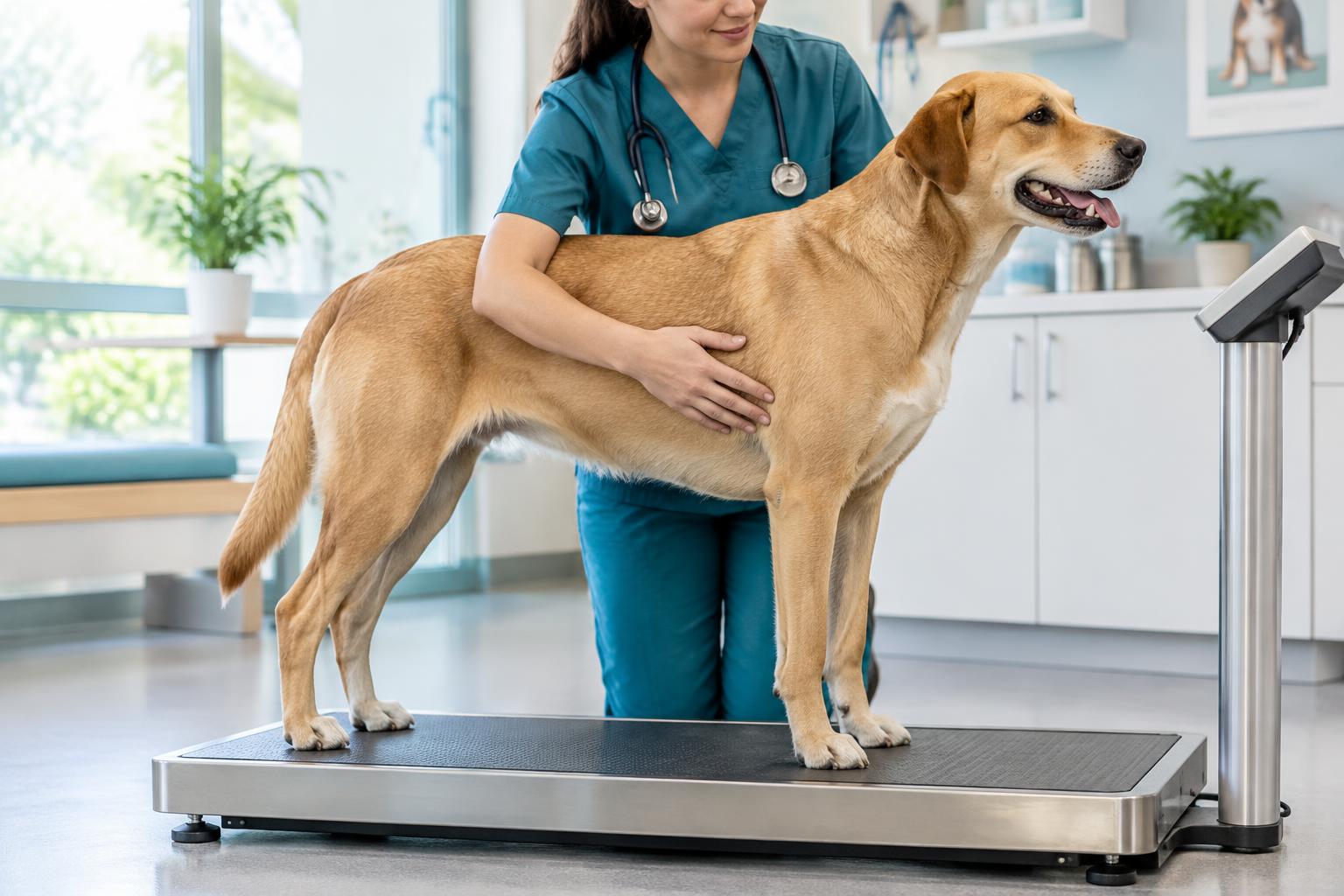
When should I call the vet?
Contact your clinic promptly for ongoing or recurrent licking, pain, limping, swelling, sores, discharge, odor or a lump between the toes. Seek urgent care for significant bleeding, a serious wound, a badly burned or torn pad, or inability to bear weight; VCA's paw-pad first-aid guide explains why these injuries need attention.
Breathing difficulty, collapse or sudden facial swelling after a sting or exposure is an emergency. Do not wait for the paw licking to stop. VCA's anaphylaxis guidance describes severe allergic reactions.
Common questions
Why does my dog lick his paws at night?
You may notice licking more when the house is quiet. The time of day alone does not identify the cause. Record whether it interrupts sleep and whether there are skin changes or other symptoms.
Does paw licking always mean allergies?
No. Normal grooming, local injury, pain, irritation and other skin problems can also explain it. Your veterinarian can investigate rather than guessing from one symptom.
How do I stop my dog licking his paws?
Address the cause, not only the licking. Safe cleaning after walks may remove ordinary irritants, while persistent licking or skin damage needs veterinary advice. Punishment and unprescribed remedies can make matters worse.
The takeaway
A brief paw clean is different from a dog who cannot leave their feet alone. Notice changes, inspect only when comfortable and record what you see. Persistent licking deserves veterinary advice; a serious injury or signs of a severe allergic reaction need urgent care.
References and further reading
- American Kennel Club — Why does my dog lick and chew his paws?
- PetMD — Why do dogs lick and chew their paws?
- VCA Animal Hospitals — Pododermatitis in dogs
- Merck Veterinary Manual — Allergies in dogs
- VCA — Care of open wounds in dogs
- VCA — First aid for torn or injured foot pads
- VCA — Anaphylaxis in dogs
Sources consulted October 22, 2026. Cover image generated with AI for illustration.
Educational information only; not a veterinary diagnosis or an individualized treatment plan. Contact your veterinarian about persistent licking, pain, skin changes or concerns about your dog's health.