Why Does My Dog Lick Me So Much? 8 Reasons Behind Dog Licking Behavior
You're relaxing on the couch when your dog walks over, looks into your eyes, and starts licking your hand.
You smile and give them a little attention.
But then the licking continues.
Your fingers, your arms, your feet — apparently, nothing is off-limits.
If you've ever wondered, "Why does my dog lick me so much?", you're not alone.
Dogs lick people for several reasons. Sometimes it's a friendly greeting or a sign of affection. Other times, they're exploring interesting tastes and smells, asking for attention, or responding to stress.
The important thing to understand is that licking doesn't have one universal meaning.
In this guide, we'll explore eight possible reasons dogs lick their owners, what different licking behaviors may suggest, and when excessive licking deserves veterinary attention.
Why Do Dogs Lick People?
Licking is a natural canine behavior that begins early in life.
Mother dogs lick their puppies as part of grooming and care. Puppies also use licking during social interactions.
As dogs mature, licking can continue to serve different purposes.
It may be part of a greeting, a way to investigate the environment, or a behavior that has been reinforced through experience.
To understand why your dog licks you, consider three questions:
- What happens immediately before the licking?
- How does your dog behave while licking?
- What usually happens afterward?
The answers may reveal patterns that are more useful than interpreting licking as affection alone.
8 Reasons Your Dog May Lick You So Much
1. Your Dog May Be Showing Affection
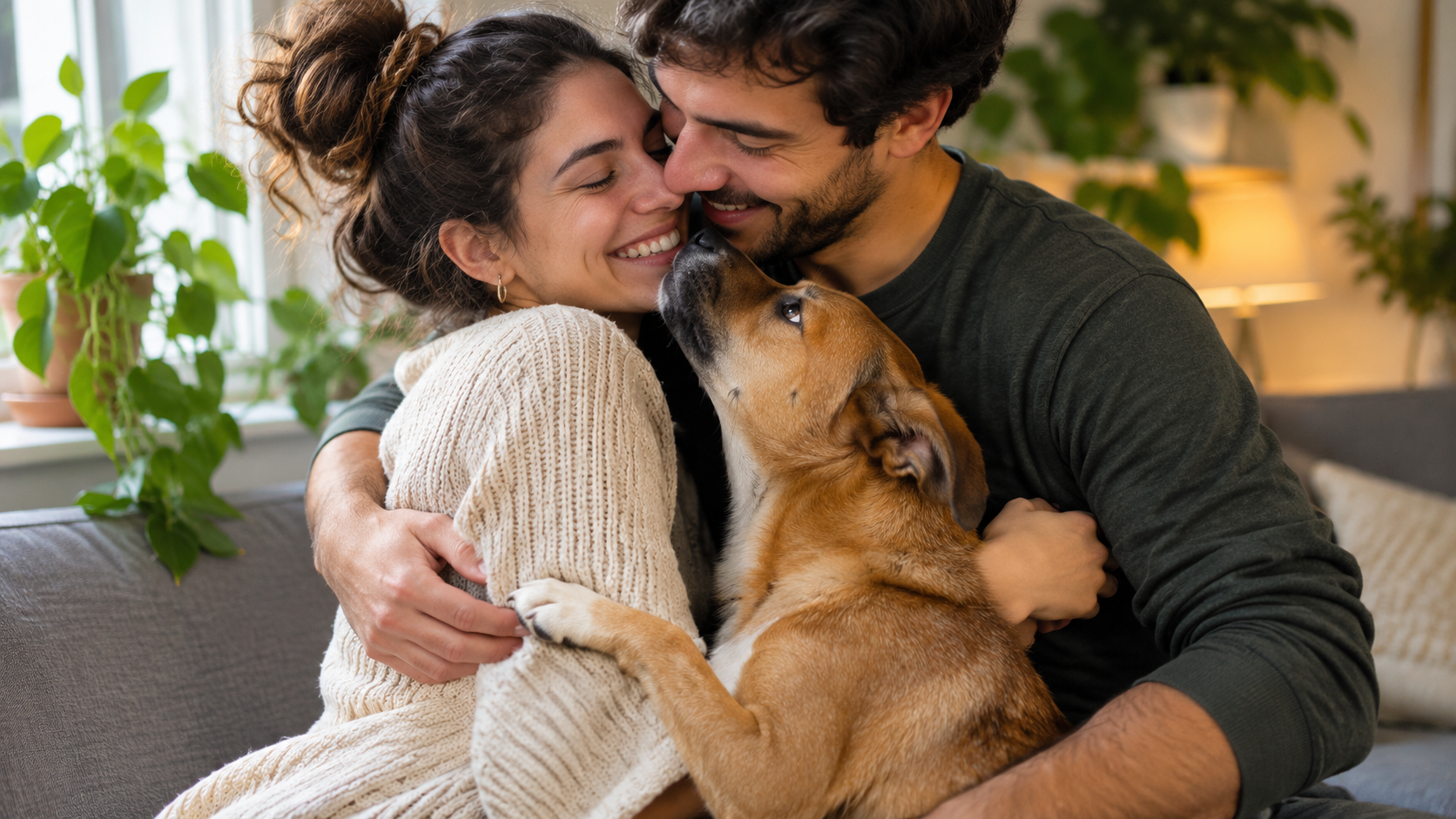
One possible reason your dog licks you is affection.
Some dogs use licking as part of friendly greetings and social interactions.
If your dog approaches voluntarily, appears relaxed, and gives you a few gentle licks, the behavior may be associated with positive social contact.
However, licking alone doesn't prove that a dog is expressing love.
Look for other signs of comfort, such as relaxed body movement, soft facial expressions, and a willingness to remain near you.
2. Your Dog Wants Your Attention
Dogs quickly learn which behaviors get a response.
Imagine your dog licks your hand while you're watching television.
You look down, speak to them, and begin petting them.
From your dog's perspective, licking successfully gained your attention.
If this pattern happens repeatedly, licking may become a reliable way to start an interaction.
Even telling your dog to stop can sometimes provide the attention they were seeking.
3. Your Skin Tastes Interesting
Human skin contains natural salts, oils, and other substances.
After exercise, sweat may make your skin particularly interesting to your dog.
Dogs also investigate scents from food, lotions, and everyday activities.
A dog licking your hands after you've prepared dinner may be more interested in lingering food odors than emotional communication.
Always prevent your dog from licking potentially harmful substances, including certain medications, skin treatments, and cleaning products.
4. Your Dog Is Exploring Through Taste and Smell
Dogs use their noses and mouths to investigate the world.
Licking can help them examine unfamiliar or interesting surfaces.
Your hands, feet, and clothing may carry scents collected throughout the day.
This can explain why a dog sometimes becomes unusually interested in one particular area.
The behavior may simply reflect curiosity.
5. Licking Is Part of Social Communication
Licking occurs in interactions between dogs, including grooming and greeting behaviors.
Some dogs also lick people during social encounters.
However, interpreting every lick as submission or respect for a human pack leader is an oversimplification.
Modern canine behavior research emphasizes context, learning, and individual relationships rather than treating every interaction as a dominance hierarchy.
A dog's posture and the circumstances surrounding the licking offer important clues.
6. Your Dog May Be Trying to Feel More Comfortable
Some dogs lick more frequently during stressful or uncertain situations.
Repetitive behaviors can sometimes occur when animals are attempting to cope with emotional discomfort.
For example, a dog may lick during an unfamiliar interaction or when their environment becomes overwhelming.
But licking does not automatically mean anxiety.
Look for additional signs such as tense posture, avoidance, pacing, trembling, or difficulty settling.
If licking is persistent or associated with distress, professional guidance may be appropriate.
7. Your Dog May Be Bored or Understimulated
Dogs need opportunities for physical activity, exploration, social interaction, and mental enrichment.
When these needs are not adequately met, some dogs may develop repetitive attention-seeking behaviors.
Licking may become one of those habits.
Providing appropriate walks, play, food puzzles, and reward-based training can help create more satisfying daily routines.
However, boredom should not be assumed to be the cause of sudden or excessive licking without considering medical explanations.
8. Your Dog May Have Learned a Habit
A behavior doesn't always need a new motivation each time it happens.
If licking has been rewarded repeatedly, it may become part of your dog's normal routine.
For example, a dog may learn that licking your hand in the morning leads to petting or breakfast.
The behavior can continue because it has become familiar and effective.
Understanding this learning process can help you teach alternative ways for your dog to request attention.
Why Does My Dog Lick My Hands?
Hands carry a variety of interesting smells.
They may contain traces of food, soap, sweat, or objects you've touched.
Your dog may also associate your hands with petting, feeding, and play.
A relaxed dog licking your hand may be engaging in friendly interaction, but the behavior could also be motivated by scent or taste.
Context matters.
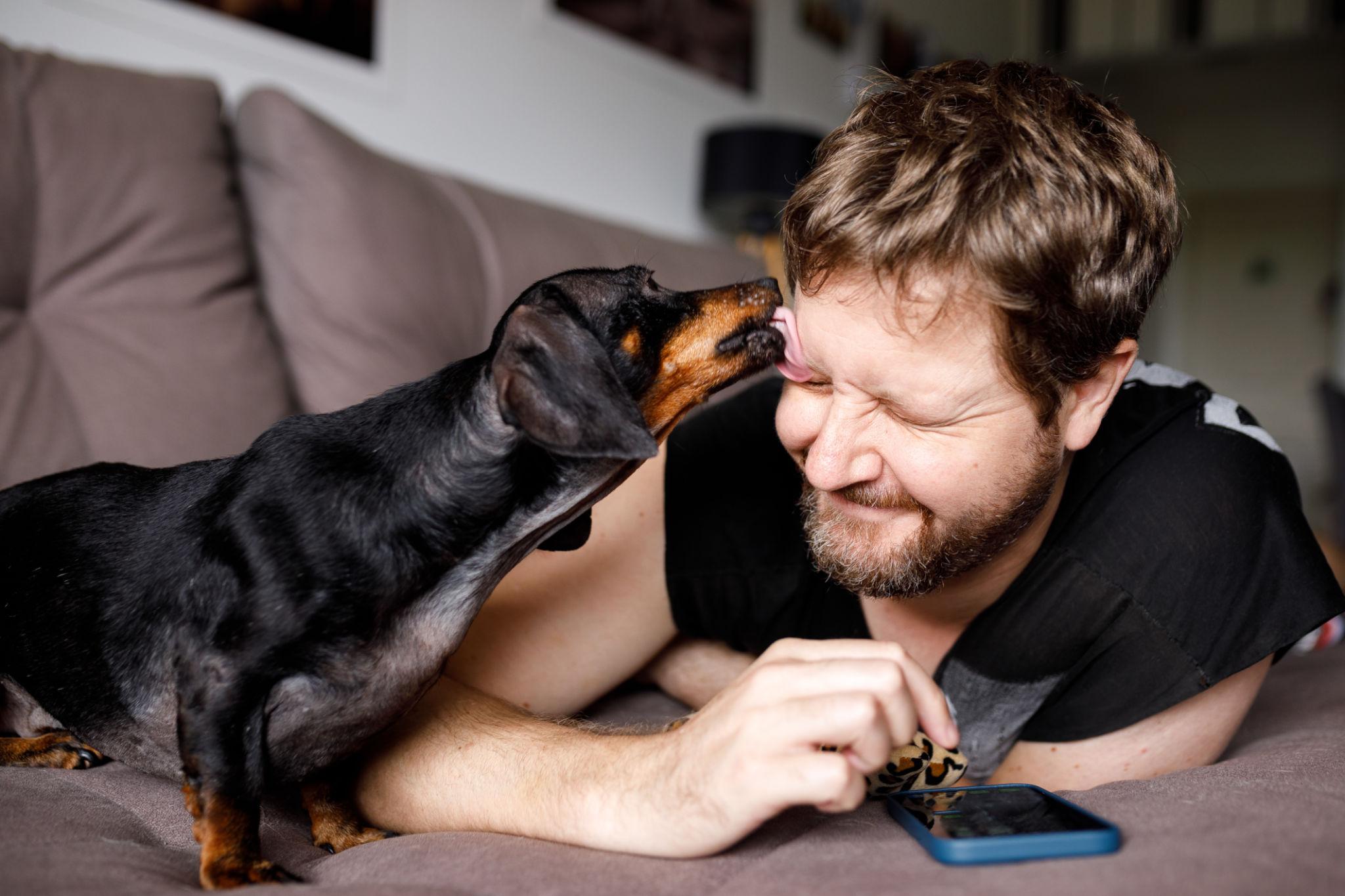
Why Does My Dog Lick My Face?
Face licking can be part of canine social behavior.
Puppies lick around the mouths of adult dogs, and licking can continue as part of greetings and interactions.
Your face may also carry interesting food-related odors.
Although some owners enjoy face licking, it's sensible to discourage licking near the mouth, nose, and eyes because dog saliva can contain microorganisms.
Avoid allowing dogs to lick open wounds, and take additional precautions around infants and people with weakened immune systems.
Why Does My Dog Lick My Feet?
Feet can be particularly interesting to dogs because they often carry sweat and strong scents.
A dog may investigate your feet after you've removed your shoes or returned from a walk.
If the behavior consistently earns laughter, attention, or interaction, it may become reinforced.
Frequent foot licking doesn't automatically indicate a problem, but you can redirect it if it's unwanted.
Why Does My Dog Lick Me When I Pet Them?
Licking during petting may occur as part of a friendly social interaction.
However, some dogs lick when they feel uncertain or uncomfortable.
Pay attention to the dog's entire body.
If your dog remains relaxed and voluntarily seeks contact, the interaction may be enjoyable.
If they turn away, stiffen, show the whites of their eyes, or repeatedly try to move away, stop petting and give them space.
A dog licking your hand is not automatic permission to continue touching them.
When Does Dog Licking Become Excessive?
There is no single number of licks that defines excessive behavior.
The more important questions are whether the behavior is new, difficult to interrupt, associated with distress, or interfering with normal activities.
Licking may deserve closer attention when:
- It suddenly becomes much more frequent.
- Your dog seems unable to stop.
- Licking interferes with sleep, play, or eating.
- Your dog repeatedly licks floors, walls, or furniture.
- Your dog develops irritated skin or hair loss from self-licking.
- The behavior appears alongside vomiting, appetite changes, pain, or unusual anxiety.
Medical causes can include allergies, skin irritation, pain, and gastrointestinal problems.
A veterinarian can help investigate the cause.
How to Stop Your Dog From Licking You Excessively
If your dog is healthy and the licking appears to be an ordinary learned behavior, reward-based training can help.
Step 1: Identify the Trigger
Observe when licking happens most often.
Does your dog lick you when you return home, when you sit on the couch, or when they want attention?
Recognizing the pattern helps you choose an appropriate alternative.
Step 2: Teach Another Way to Ask for Attention
Reward your dog for sitting calmly, bringing a toy, or resting beside you.
Make these alternative behaviors more rewarding than licking.
Step 3: Redirect Without Punishment
If licking begins, calmly interrupt the interaction and invite your dog to perform a familiar behavior.
Reward the alternative behavior.
Avoid shouting, frightening your dog, or using harsh corrections.
Step 4: Provide Appropriate Enrichment
Offer suitable chew toys, food puzzles, scent games, and daily exercise.
Some dogs enjoy supervised lick mats filled with an appropriate portion of their regular food.
Use only dog-safe ingredients and account for additional calories.
Step 5: Be Consistent
If licking sometimes earns enthusiastic attention and sometimes earns a reprimand, your dog may struggle to understand what you want.
Reward the behavior you prefer consistently.
If licking is compulsive or linked to anxiety, seek veterinary or qualified behavioral help rather than relying on training alone.
Is It Safe to Let Your Dog Lick You?
An occasional lick on intact skin is usually a relatively low-risk interaction for a healthy adult, but dog saliva is not sterile.
It can contain bacteria and other microorganisms.
Avoid allowing dogs to lick open cuts, wounds, or mucous membranes such as the mouth and eyes.
Young children, people with weakened immune systems, and others at increased infection risk should take extra precautions.
Wash exposed skin when appropriate and practice good hand hygiene.
If a dog licks a wound and signs of infection develop, seek medical advice.
Frequently Asked Questions
Do dogs lick people because they love them?
Sometimes licking is associated with affection and friendly social interaction. However, it can also be motivated by attention, taste, curiosity, or stress.
Why does my dog lick me more than other people?
Your dog may have learned that licking you produces a particular response. Familiarity, scent, and your history of interactions may also influence the behavior.
Why does my dog lick me when I come home?
Licking may be part of an excited greeting. Your dog may also have learned that licking leads to attention after a reunion.
Why does my dog lick me before going to sleep?
Some dogs lick during quiet social interactions or as part of a learned bedtime routine. The behavior alone doesn't establish a specific emotional meaning.
Can licking be a sign of anxiety?
Yes, excessive or repetitive licking can sometimes be associated with stress or anxiety. However, medical problems should also be considered.
Should I let my dog lick my face?
It's safer to discourage licking around the mouth, nose, and eyes, particularly for children and people at increased infection risk.
How do I stop my dog from licking my hands?
Teach and reward alternative behaviors, such as sitting calmly or bringing a toy. Avoid accidentally reinforcing unwanted licking with attention.
When should I take my dog to the vet for licking?
Consult your veterinarian if licking suddenly increases, becomes compulsive, causes skin damage, or occurs alongside signs of illness or distress.
Final Thoughts: Your Dog's Licks May Mean More Than One Thing
Licking is a normal part of canine behavior, but its meaning depends on the individual dog and the situation.
Your dog may lick you because they enjoy social contact, find your scent interesting, want attention, or have learned that licking leads to something rewarding.
In other situations, frequent licking may indicate discomfort, stress, or a medical concern.
The best way to understand the behavior is to look beyond the lick itself.
Observe your dog's body language, daily routine, and overall health.
Because when it comes to understanding dogs, context often tells us more than any single behavior.
Sources and Further Reading
-
American Kennel Club — Why Does My Dog Lick Me?
https://www.akc.org/expert-advice/advice/why-is-my-dog-licking-me/ -
PetMD — Why Do Dogs Lick You?
https://www.petmd.com/dog/behavior/why-do-dogs-lick-you -
The Royal Kennel Club — Why Does My Dog Lick Me So Much?
https://www.royalkennelclub.com/health-and-dog-care/health-dog-care/health/health-and-care/a-z-of-health-and-care-issues/why-does-my-dog-lick-me-so-much/ -
VCA Animal Hospitals — Why Do Dogs Lick Humans?
https://vcahospitals.com/resources/behavior-dog/why-do-dogs-lick-humans -
PetMD — Excessive Licking, Chewing, and Grooming in Dogs (Updated February 2026)
https://www.petmd.com/dog/general-health/excessive-licking-chewing-and-grooming-dogs