Why Does My Dog Tilt Their Head When I Talk? The Science Behind This Adorable Habit
You're talking to your dog when something adorable happens.
You ask, "Do you want to go for a walk?"
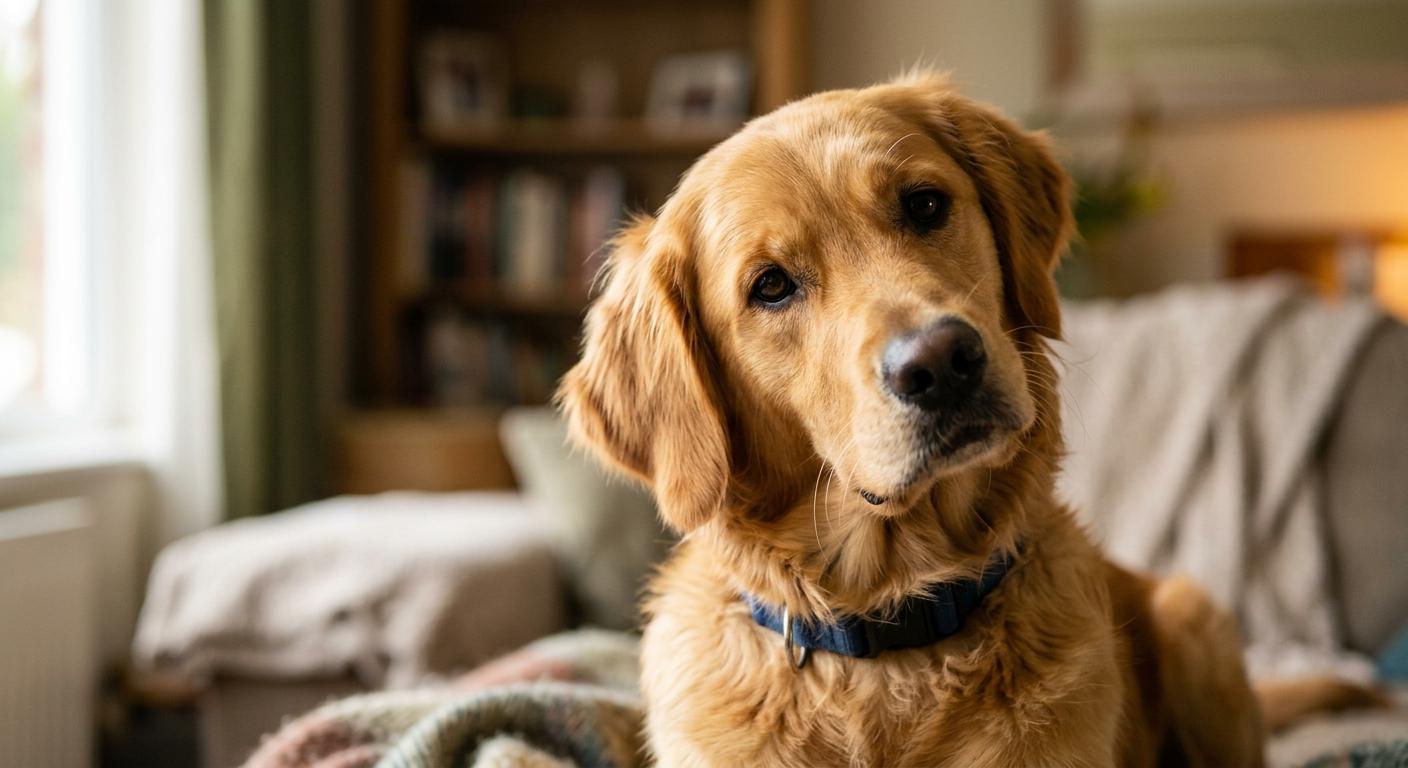
Your dog looks directly at you, raises their ears, and slowly tilts their head to one side.
You say another word, and the head tilts in the opposite direction.
It's one of those little moments that makes living with a dog so special.
But what's actually happening?
Why do dogs tilt their heads when we talk to them?
Scientists don't have one definitive answer. However, research suggests that this behavior may involve attention, hearing, visual perception, learning, and the way dogs process meaningful sounds.
One particularly interesting study found a connection between head tilting and dogs that had learned the names of specific toys.
Let's explore what researchers have discovered, what remains uncertain, and how to tell the difference between a normal head tilt and a possible medical problem.
Why Do Dogs Tilt Their Heads When You Talk?
Dogs may tilt their heads for several reasons.
The most commonly discussed explanations include:
- Paying closer attention to familiar words.
- Adjusting how they hear or locate sounds.
- Getting a better view of your face.
- Processing information associated with previous experiences.
- Repeating a behavior that receives positive attention.
These explanations aren't mutually exclusive.
Your dog might tilt their head for different reasons in different situations.
For example, an unfamiliar noise may prompt your dog to adjust their ears, while a familiar word such as "walk" may capture their attention because it predicts an exciting activity.
The important point is that head tilting is not proof that your dog understands every word you're saying.
It is a behavior that researchers are still working to understand.
1. Your Dog May Be Paying Attention to Important Words
Imagine saying several ordinary sentences to your dog.
They listen quietly.
Then you mention a favorite toy, and suddenly their head tilts.
This reaction might be connected to the meaning your dog has learned to associate with particular sounds.
Dogs can learn that certain words predict objects, actions, or events.
For example:
- "Walk" may predict going outside.
- "Dinner" may predict food.
- "Ball" may refer to a familiar toy.
- "Sit" may signal a trained behavior.
- A family member's name may predict that person's arrival.
When a dog recognizes a meaningful sound, they may become more attentive.
But does head tilting actually reflect this kind of mental processing?
A scientific study provides an intriguing clue.
2. What Science Says About Dogs Tilting Their Heads
In a study published online in 2021 and in the journal Animal Cognition in 2022, researchers investigated head tilting in dogs during tests involving familiar toy names.
The researchers observed 40 dogs while their owners verbally requested specific toys.
The group included seven dogs identified as gifted word learners — dogs with an unusual ability to learn the names of objects.
The researchers found that these gifted word learners tilted their heads more frequently when hearing requests involving familiar toy names than the other dogs.
They also observed that individual dogs tended to maintain a preferred direction of head tilt across multiple testing sessions.
What Does This Mean?
The findings suggest that head tilting may sometimes be associated with processing meaningful auditory information.
In other words, a dog might tilt their head when concentrating on a sound that has particular significance.
However, the study was exploratory and involved a small number of unusually skilled word-learning dogs.
It does not establish that all dogs tilt their heads because they understand words.
Nor does it mean that dogs who rarely tilt their heads are less intelligent.
The takeaway: Head tilting may be linked to attention and meaningful sounds in some dogs, but more research is needed.
3. Dogs May Tilt Their Heads to Hear Sounds More Clearly
Dogs have remarkable hearing abilities, but their ears work differently from ours.
The shape, position, and movement of a dog's ears can affect how sound reaches the ear canal.
Some dogs have upright ears.
Others have long, floppy ears that partially cover the ear opening.
A head movement may help a dog adjust the way they receive sound.
Does Tilting Help Dogs Locate Sounds?
Possibly.
When a sound reaches one ear slightly before the other, the brain can use that difference to help determine where the sound originates.
Adjusting the head and ears may change how a dog perceives a sound.
For example, your dog might tilt their head after hearing:
- A distant whistle.
- An unfamiliar electronic sound.
- A squeaky toy.
- A person speaking in an unusual tone.
- A sound coming from another room.
However, scientists have not established that improving sound localization is the primary reason dogs tilt their heads during human conversation.
The behavior may have multiple functions.
4. Your Dog May Be Trying to See Your Face Better
Here's another interesting possibility.
A dog's muzzle can affect what they see directly in front of them.
Imagine holding your fist in front of your nose while looking at someone's face.
You may need to change your head position to get a clearer view.
Some researchers have suggested that dogs with longer muzzles might benefit from adjusting their head position when looking at people.
Why would this matter?
Because dogs pay attention to more than the words we speak.
They also observe our:
- Facial expressions.
- Body movements.
- Eye direction.
- Gestures.
- Tone of voice.
A clearer view of your face could help a dog gather additional information.
Do Long-Nosed Dogs Tilt Their Heads More Often?
The idea is plausible, and preliminary observations have explored a possible connection between muzzle shape and head tilting.
However, the evidence is not strong enough to conclude that muzzle length determines how frequently a dog tilts their head.
Dogs with short muzzles can tilt their heads, too.
Individual behavior, learning history, and context may all play a role.
5. Your Reactions May Encourage the Behavior
Think about what happens when your dog tilts their head.
You probably smile.
You might laugh, speak in an excited voice, or give your dog extra attention.
Sometimes you repeat the same word just to see that adorable expression again.
From a learning perspective, these reactions matter.
Dogs can repeat behaviors that are followed by rewarding experiences.
If a head tilt consistently leads to attention, affection, or another positive outcome, that behavior may become more frequent.
This is known as positive reinforcement.
It doesn't necessarily mean your dog is consciously trying to look cute.
Instead, they may have learned that a particular behavior is followed by something enjoyable.
6. Why Does My Dog Tilt Their Head When I Say Certain Words?
Some words carry more meaning for dogs than others.
A dog may react strongly to words associated with familiar routines.
Consider the difference between saying:
"The weather looks nice today."
And:
"Do you want to go outside?"
Your dog may have learned that the second phrase predicts an exciting event.
The head tilt could reflect increased attention, anticipation, or an attempt to process familiar information.
Do Dogs Understand Human Language?
Dogs can learn associations between spoken cues and particular outcomes.
Some can also learn names for objects.
However, recognizing familiar words is not the same as understanding human language in the way people do.
Dogs rely on a combination of learned cues, tone, body language, and context.
Your dog's response to a familiar phrase may reflect several of these factors working together.
7. Why Do Some Dogs Tilt Their Heads More Than Others?
If your dog rarely tilts their head, there's no reason to feel disappointed.
Not every dog expresses attention in the same way.
Some dogs respond to interesting sounds by raising their ears.
Others turn their entire head, move closer, or simply watch quietly.
Possible influences on head tilting include individual learning history, ear structure, muzzle shape, and the situations in which a dog encounters particular sounds.
Researchers are still investigating which factors matter most.
Does Breed Affect Head Tilting?
There isn't enough strong evidence to rank dog breeds reliably by how often they tilt their heads.
A Cocker Spaniel, Border Collie, Beagle, or mixed-breed dog may all display the behavior.
What matters more is the individual dog and the context.
Does Age Matter?
Puppies and older dogs may respond differently to sounds and visual cues.
Changes in hearing, vision, attention, or health could influence behavior.
However, researchers have not established a universal age-related pattern for normal conversational head tilting.
8. Does Head Tilting Mean My Dog Is Intelligent?
Not necessarily.
The research involving gifted word-learning dogs is fascinating, but it doesn't justify using head tilting as an intelligence test.
A dog that frequently tilts their head isn't automatically smarter than a dog that doesn't.
Dogs express attention and learning in many ways.
One dog may respond quickly to spoken cues.
Another may be especially skilled at scent games.
A third may excel at interpreting gestures or navigating new environments.
Head tilting is only one small piece of a much larger picture.
9. Can You Encourage Your Dog to Tilt Their Head?
You can observe which sounds or words naturally capture your dog's attention.
However, there's no need to deliberately create startling noises or repeatedly frustrate your dog to get a cute reaction.
If you want to explore how your dog responds to familiar words, try a gentle activity.
A Simple Listening Game
Step 1: Choose a familiar object
Select a toy your dog already knows and enjoys.
Step 2: Find a quiet environment
Reduce distractions so your dog can focus comfortably.
Step 3: Say the toy's name naturally
Use your normal speaking voice.
Step 4: Observe your dog's response
They may look toward the toy, raise their ears, move closer, or tilt their head.
Step 5: Reward appropriate engagement
If your dog responds to a familiar cue, you can reward them with play or praise.
Step 6: Keep the session short
Stop while your dog is still interested.
Remember that this is a casual enrichment activity, not a scientific test of language comprehension.
And if your dog never tilts their head, that's perfectly normal.
10. When Is Head Tilting a Sign of a Health Problem?
This is an important distinction.
A brief head tilt when your dog hears a word or sound is usually a normal behavior.
But a sudden or persistent head tilt that occurs without an obvious trigger can indicate a medical problem.
Possible causes include:
- Ear infections.
- Problems affecting the middle or inner ear.
- Vestibular disease.
- Neurological disorders.
- Other conditions affecting balance or head position.
The vestibular system helps animals maintain balance and spatial orientation.
When it isn't functioning normally, a dog may hold their head to one side or experience difficulty standing and walking.
Warning Signs to Watch For
Contact a veterinarian promptly if your dog develops a new or persistent head tilt, particularly if you also notice:
- Stumbling or loss of balance.
- Circling.
- Falling to one side.
- Rapid, involuntary eye movements.
- Vomiting.
- Difficulty walking.
- Signs of ear pain.
- Sudden disorientation.
A sudden head tilt accompanied by loss of balance, falling, vomiting, or neurological signs warrants urgent veterinary assessment.
Don't assume these symptoms are simply another version of your dog's cute listening behavior.
Normal Head Tilt vs. Possible Medical Problem
| Normal Listening Behavior | Potential Warning Sign |
|---|---|
| Brief tilt during conversation | Persistent tilt without a clear trigger |
| Dog remains comfortable and alert | Dog appears disoriented |
| Normal walking and balance | Stumbling, circling, or falling |
| Tilt stops when attention shifts | Tilt continues during ordinary activities |
| No other concerning symptoms | Vomiting, ear pain, or abnormal eye movements |
This table is a general guide, not a diagnostic tool.
If you're uncertain about a change in your dog's head position, consult your veterinarian.
11. How to Better Understand Your Dog's Body Language
Head tilting is just one of many signals dogs use during interactions.
To understand what your dog may be experiencing, look at the entire situation.
Pay attention to:
Ear position: Are the ears relaxed, raised, or pulled back?
Body posture: Does your dog look loose and comfortable or tense and stiff?
Tail movement: Is the tail moving freely, held high and rigid, or tucked?
Facial expression: Does your dog appear relaxed or show signs of discomfort?
Context: Did the behavior occur during play, training, an unfamiliar sound, or a stressful event?
Avoid interpreting a single movement in isolation.
A relaxed dog tilting their head during a familiar conversation is different from a dog showing a persistent tilt while struggling to walk.
12. Why This Little Behavior Strengthens Our Bond With Dogs
Part of the charm of head tilting is that it makes dogs seem especially attentive.
When your dog looks directly at you and turns their head, the interaction can feel almost conversational.
You speak.
Your dog responds.
You smile.
The moment becomes a small exchange of attention.
Even though we don't fully understand every reason behind the behavior, it reminds us how closely dogs observe and respond to the people around them.
And that connection is worth appreciating without assigning human thoughts or intentions that we cannot verify.
Frequently Asked Questions
Why does my dog tilt their head when I talk to them?
Dogs may tilt their heads to focus on meaningful sounds, adjust how they hear, improve their view, or respond to learned cues. Scientists believe several factors may contribute.
Why does my dog tilt their head when I say "walk"?
Your dog may associate the word with an enjoyable activity. The head tilt could reflect attention or anticipation, although it doesn't prove exactly what your dog is thinking.
Do dogs tilt their heads because they're confused?
Sometimes head tilting may occur while a dog processes unfamiliar information, but confusion isn't the only explanation. Attention and recognition may also play roles.
Do dogs tilt their heads to hear better?
Possibly. Changing head and ear position may affect how dogs receive sounds. However, research has not established that this is the main reason for conversational head tilting.
Why does my dog tilt their head to the same side?
Some dogs show an individual preference for one direction. A study of dogs learning toy names observed relatively stable head-tilt direction. However, a persistent tilt that doesn't resolve requires veterinary evaluation.
Why doesn't my dog ever tilt their head?
Not all dogs display this behavior frequently. Its absence does not indicate poor hearing, low intelligence, or a weak bond with their owner.
Is head tilting a sign of affection?
A head tilt can occur during positive social interactions, but it isn't reliable proof of affection on its own. Consider your dog's overall body language and behavior.
Can I train my dog to tilt their head?
Some dogs may learn to repeat naturally occurring head tilts when the behavior is rewarded. Keep any training gentle and never use frightening sounds or uncomfortable manipulation.
When should I worry about my dog's head tilt?
Contact your veterinarian if the tilt is new, persistent, unrelated to a sound, or accompanied by ear pain, vomiting, stumbling, circling, or balance problems.
Final Thoughts: Your Dog May Be Listening More Closely Than You Think
That adorable sideways glance may involve more than simple curiosity.
Research suggests that head tilting can sometimes be connected to how dogs attend to meaningful sounds.
Other explanations involve hearing, visual perspective, and learned responses to human attention.
The truth is that scientists are still discovering how these factors interact.
For most healthy dogs, a brief head tilt during conversation is simply one of the many fascinating ways they respond to their surroundings.
So the next time your dog tilts their head when you mention their favorite toy, enjoy the moment.
You may be watching a small but remarkable example of canine attention and communication.
And if the head tilt becomes persistent or appears alongside other symptoms, seek veterinary advice.
References and Further Reading
1. Sommese, A., et al. — An Exploratory Analysis of Head-Tilting in Dogs (Animal Cognition)
https://pmc.ncbi.nlm.nih.gov/articles/PMC9107419/
2. American Kennel Club — Why Do Dogs Tilt Their Heads?
https://www.akc.org/expert-advice/health/why-do-dogs-tilt-their-heads/
3. VCA Animal Hospitals — Why Dogs Tilt Their Heads
https://vcahospitals.com/know-your-pet/why-dogs-tilt-their-heads
4. PetMD — Why Do Dogs Tilt Their Heads?
https://www.petmd.com/dog/behavior/why-do-dogs-tilt-their-heads
5. PDSA — Head Tilt in Dogs
https://www.pdsa.org.uk/pet-help-and-advice/pet-health-hub/symptoms/head-tilt-in-dogs